Nicrophorus vespilloides
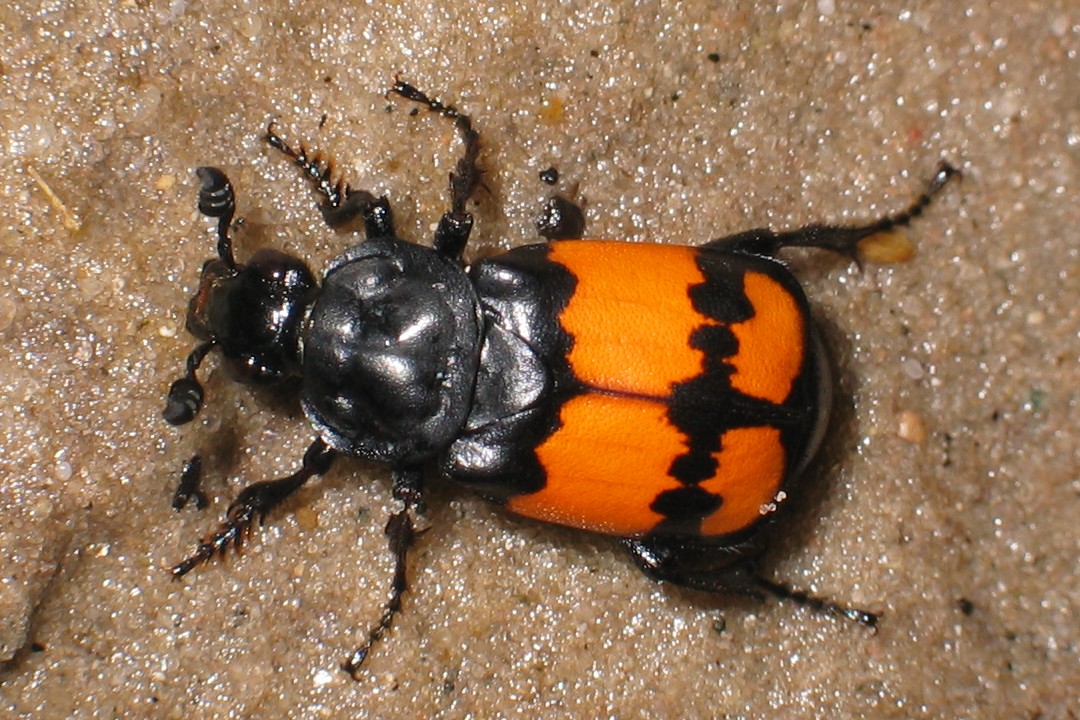
Nicrophorus vespilloides is a burying beetle described by Johann Friedrich Wilhelm Herbst in 1783. The beetles vary widely in size and can present with a range of anywhere from 12 mm to 20 mm in size. They have two conspicuous orange-yellow bands on the elytra. The color of the antennae are an important distinguishing feature, being totally black. The color of their orange and black markings is multifunctional, as they are conspicuous to avian predators. In general, they present a unique ecological niche, which is their evolution of aposematism, or the strategy they use to warn predators through their conspicuous signals. The wing cases of these beetles possess a squarish shape and are notably shorter in length than their abdomens, indicating a distinct physical characteristic of the species. Source
Where it is now
No records in the last 8 weeks. It may be out of season where the observers and sensors are.
See the Nicrophorus vespilloides on the live map
Arrival dates
The week it was first heard regularly in each region, after at least six weeks away. Dates differ from south to north, so a region has a range.
| Region | First arrival | Last arrival | Typical peak | Areas |
|---|---|---|---|---|
| Europe | 18 May 2026 | 18 May 2026 | 18 May 2026 | 1 |
Figures are effort corrected and come from automatic sound identification, which makes mistakes. How this is measured and how it compares with human observers.