Gray Gerygone
Gerygone igata
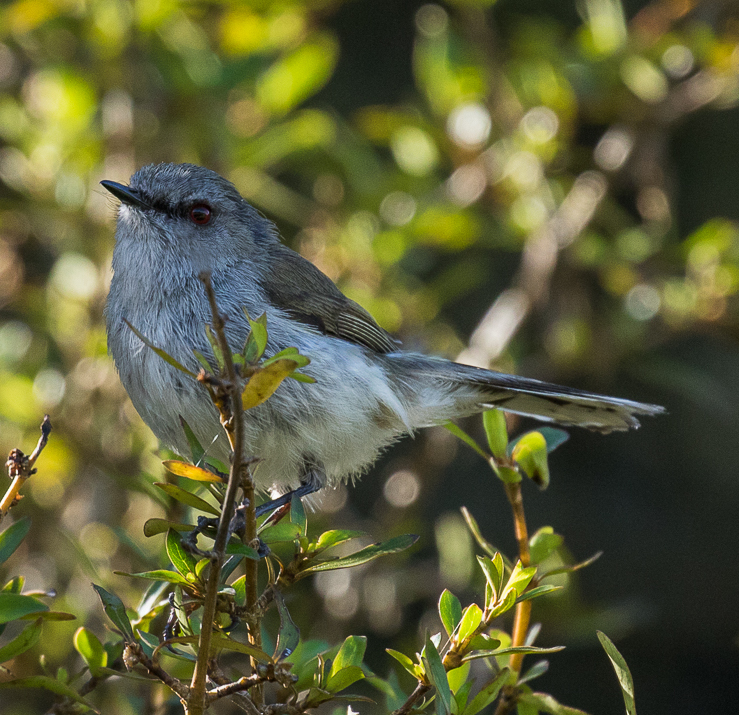
The grey warbler, also known by its Māori name riroriro, is an insectivorous bird in the family Acanthizidae endemic to New Zealand. Internationally, ornithologists usually refer to it as the grey gerygone or New Zealand gerygone to avoid confusion with unrelated birds also known as warblers. It is also sometimes known as the rainbird. The specific name igata was given by French naturalists Jean René Constant Quoy and Joseph Paul Gaimard, who claimed that this was the local name among the Māori inhabitants of Tasman Bay; this was likely a misunderstanding as no iwi are known to have a name resembling "igata" for the bird. Its natural habitat is forests, but also tends to occupy lower vegetation habitats. These insectivorous birds feed on insects living in shrubs, and often feed on the wing. They are found throughout New Zealand, as well as offshore islands where shrub exists. They also flourish in suburban areas where there is vegetation present. Source
Where it is now
In the last 8 weeks this bird was recorded 74,651 times across 7 areas (each area is a 5 degree square).
See the Gray Gerygone on the live map
Arrival dates
The week it was first heard regularly in each region, after at least six weeks away. Dates differ from south to north, so a region has a range.
| Region | First arrival | Last arrival | Typical peak | Areas |
|---|---|---|---|---|
| Oceania | 2 February 2026 | 13 July 2026 | 17 August 2026 | 4 |
Figures are effort corrected and come from automatic sound identification, which makes mistakes. How this is measured and how it compares with human observers.