Tundra Swan
Cygnus columbianus
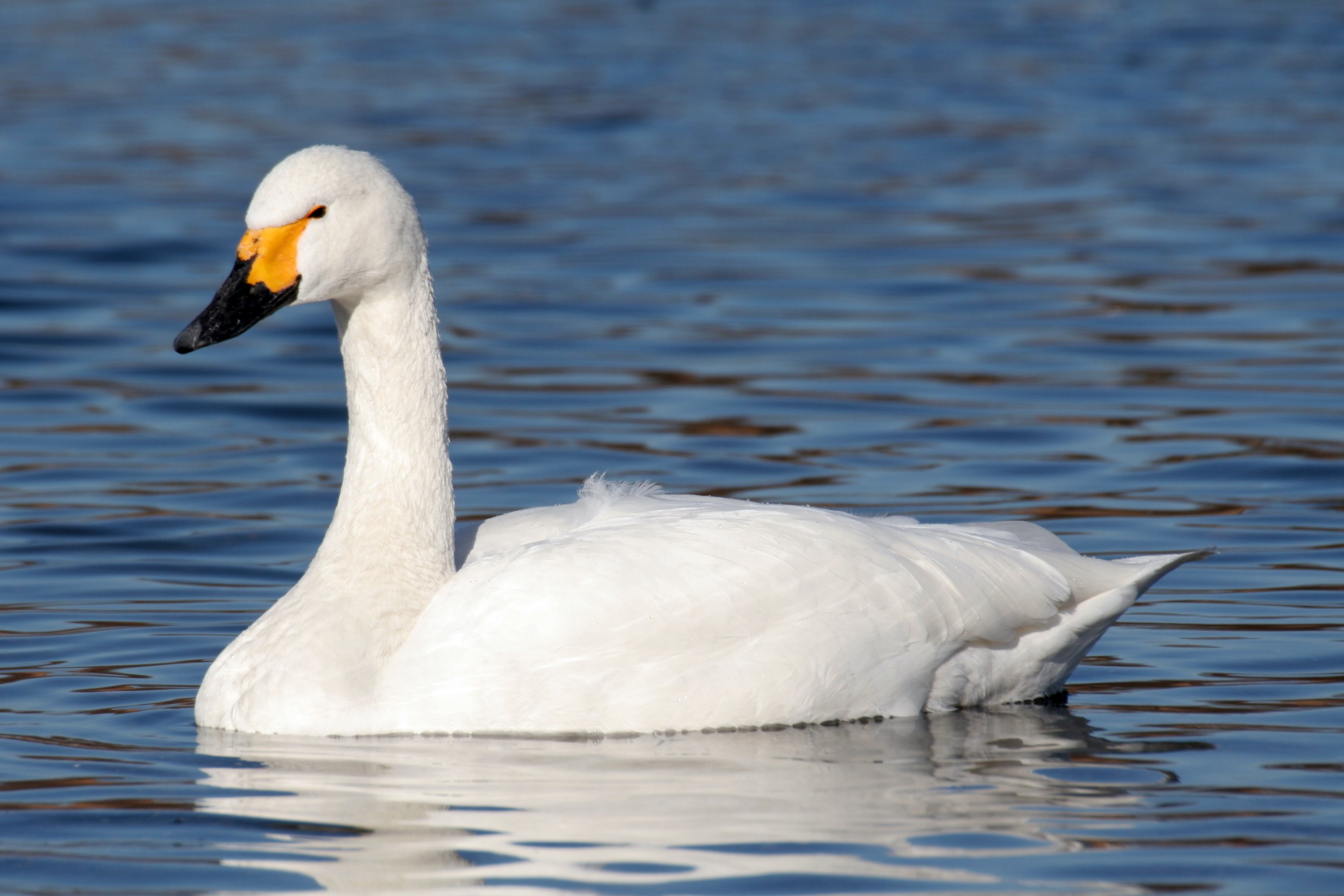
The tundra swan is a species of swan which breeds in the arctic, and overwinters in North America, Europe, and Asia. It is the smallest of the Holarctic swans, at 115–150 cm (45–59 in) in length, 168–211 cm (66–83 in) in wingspan and 3.4–9.6 kg (7.5–21.2 lb) in weight. Typically, the plumage of adults is entirely white, with solid black feet, a black beak that has varying amounts of yellow, and a thin streak of pink along the mouthline, although colour variation is common. Source
Where it is now
In the last 8 weeks this bird was recorded 75,393 times across 85 areas (each area is a 5 degree square).
See the Tundra Swan on the live map
Movement and weather
Each season it is first heard regularly where daytime highs are around 15°C (typically 7 to 21°C, from 31 areas). That range is wide, so temperature alone does not explain when it turns up.
Over the weeks it was present in the past year, its centre in North America ranged from 43°N in December to 60°N in May, about 1,800 km apart.
Arrival dates
The week it was first heard regularly in each region, after at least six weeks away. Dates differ from south to north, so a region has a range.
| Region | First arrival | Last arrival | Typical peak | Areas |
|---|---|---|---|---|
| North America | 23 February 2026 | 5 October 2026 | 5 October 2026 | 20 |
| Europe | 17 November 2025 | 5 October 2026 | 10 August 2026 | 11 |
Figures are effort corrected and come from automatic sound identification, which makes mistakes. How this is measured and how it compares with human observers.