Eurasian Nightjar
Caprimulgus europaeus
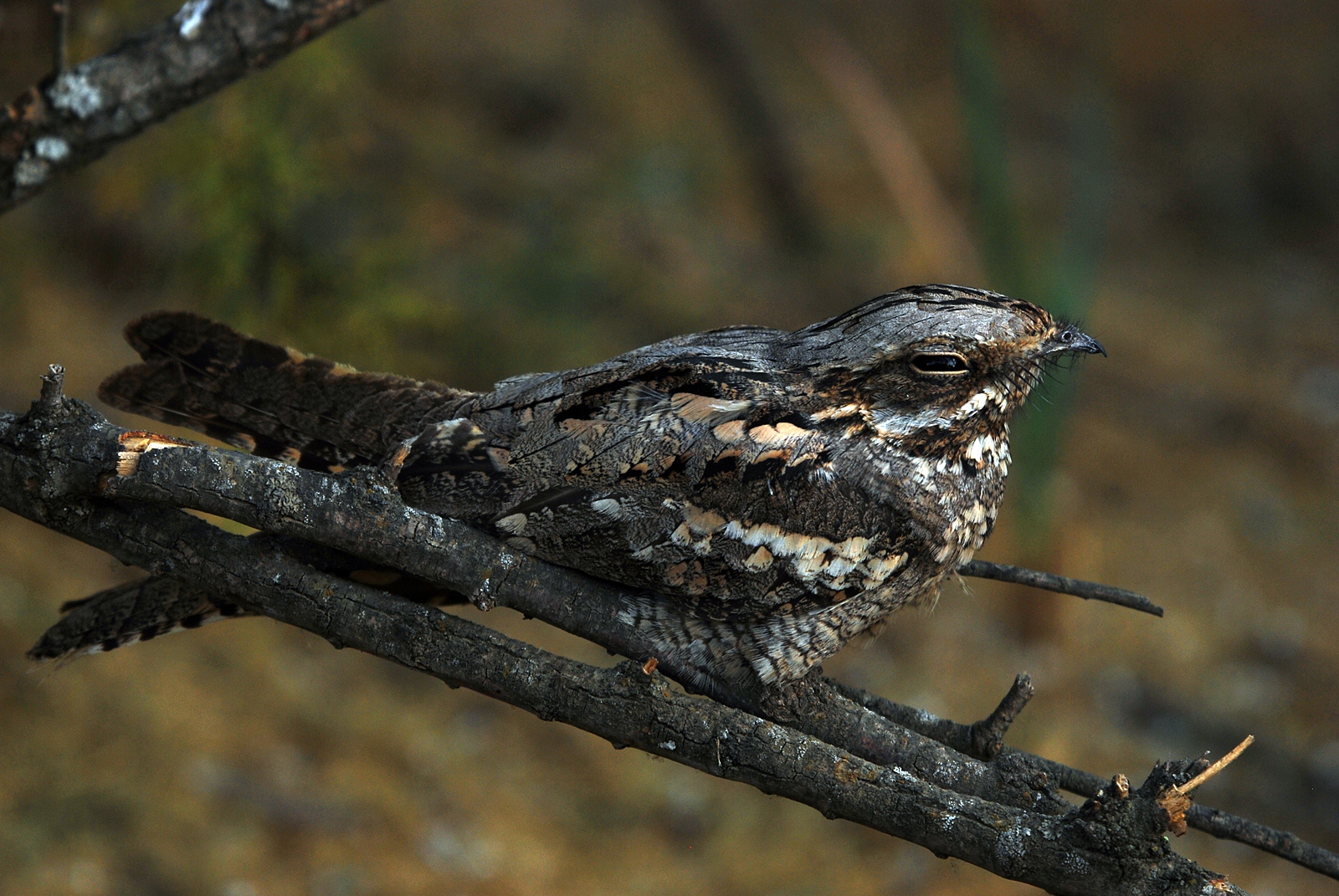
The European nightjar, common goatsucker, Eurasian nightjar or just nightjar is a crepuscular and nocturnal bird in the nightjar family that breeds across most of Europe and the Palearctic to Mongolia and Northwestern China. The Latin generic name refers to the old myth that the nocturnal nightjar suckled from goats, causing them to cease to give milk. The six subspecies differ clinally, the birds becoming smaller and paler towards the east of the range. All populations are migratory, wintering in sub-Saharan Africa. Their densely patterned grey and brown plumage makes individuals difficult to see in the daytime when they rest on the ground or perch motionless along a branch, although the male shows white patches in the wings and tail as he flies at night. Source
Where it is now
In the last 8 weeks this bird was recorded 5,364 times across 48 areas (each area is a 5 degree square).
See the Eurasian Nightjar on the live map
Movement and weather
Each season it is first heard regularly where daytime highs are around 19°C (typically 13 to 21°C, from 17 areas).
Over the weeks it was present in the past year, its centre in Europe ranged from 38°N in May to 54°N in September, about 1,800 km apart.
Arrival dates
The week it was first heard regularly in each region, after at least six weeks away. Dates differ from south to north, so a region has a range.
| Region | First arrival | Last arrival | Typical peak | Areas |
|---|---|---|---|---|
| Europe | 17 November 2025 | 31 August 2026 | 29 June 2026 | 15 |
| Africa | 13 April 2026 | 4 May 2026 | 15 June 2026 | 2 |
Figures are effort corrected and come from automatic sound identification, which makes mistakes. How this is measured and how it compares with human observers.