Gray Wolf
Canis lupus
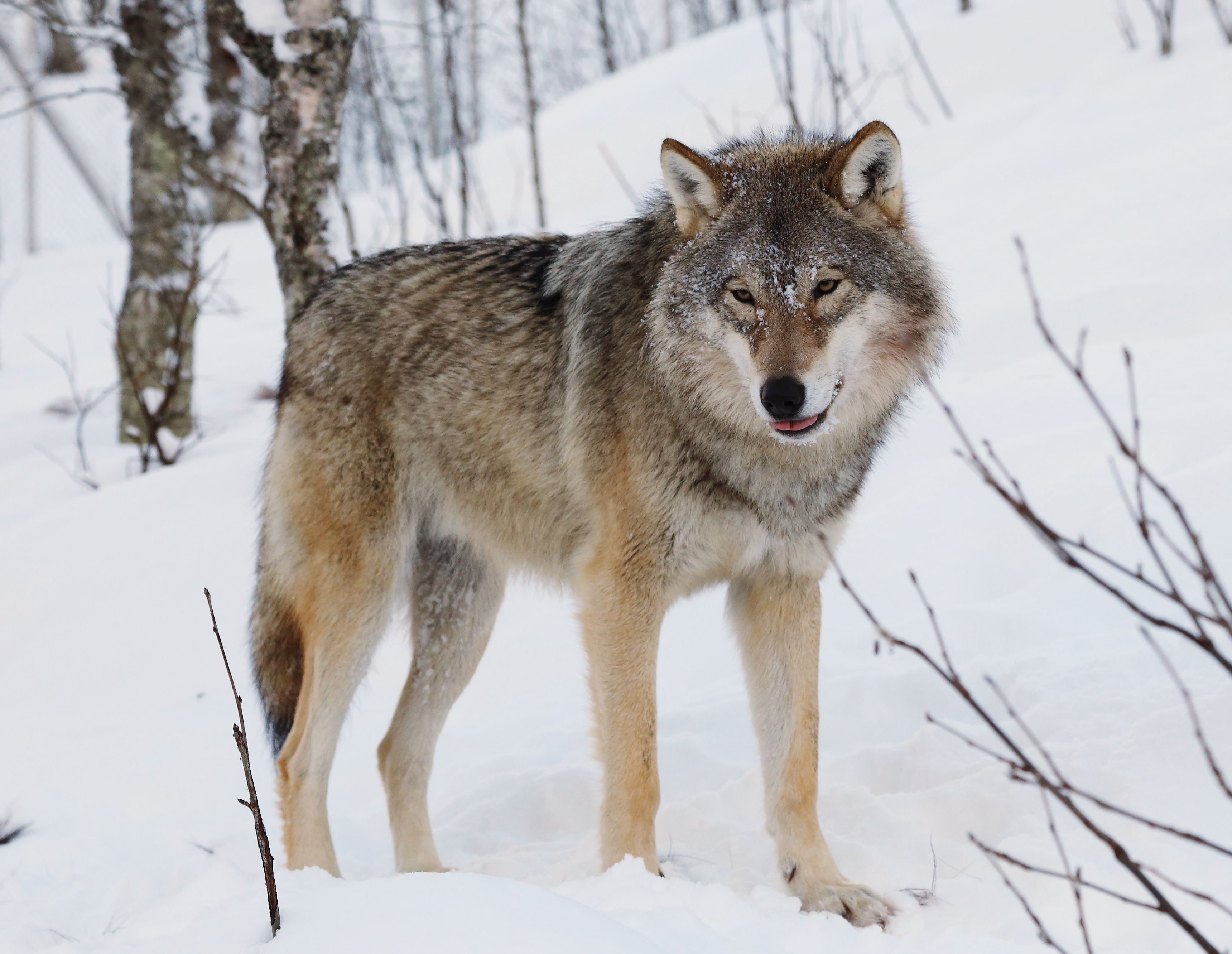
The wolf, also known as the grey wolf or gray wolf, is a canine native to Eurasia and North America. More than thirty subspecies of Canis lupus have been recognized, including the dog and dingo, though grey wolves, as popularly understood, include only naturally occurring wild subspecies. The wolf is the largest wild extant member of the family Canidae, and is further distinguished from other Canis species by its less pointed ears and muzzle, as well as a shorter torso and a longer tail. The wolf is nonetheless related closely enough to smaller Canis species, such as the coyote and the golden jackal, to produce fertile hybrids with them. The wolf's fur is usually mottled white, brown, grey, and black, although subspecies in the arctic region may be nearly all white. Source
Where is the Gray Wolf now?
In the last 8 weeks this mammal was recorded 1,295 times across 39 areas (each area is a 5 degree square).
See the Gray Wolf on the live map
When does the Gray Wolf arrive?
The week it was first heard regularly in each region, after at least six weeks away. Dates differ from south to north, so a region has a range.
| Region | First arrival | Last arrival | Typical peak | Areas |
|---|---|---|---|---|
| North America | 12 October 2026 | 12 October 2026 | 19 October 2026 | 1 |
Arriving at the same time in North America
- Common Redpoll Acanthis flammea
- Eurasian Wigeon Mareca penelope
- Northern Shrike Lanius borealis
- Pine Grosbeak Pinicola enucleator
- Snow Bunting Plectrophenax nivalis
- Long-tailed Duck Clangula hyemalis
- Common Eider Somateria mollissima
- Band-tailed Barbthroat Threnetes ruckeri
Every arrival in North America, month by month
Figures are effort corrected and come from automatic sound identification, which makes mistakes. How this is measured and how it compares with human observers.